Entertainment Story
By Nowaystories Editorial Team
April 13, 2026
Have you ever stared at a picture and suddenly wondered if your eyes were playing tricks on you? Optical illusions have fascinated people for centuries, making us question reality in the most delightful ways. In 2019, a group of neuroscientists at the University of Chicago studied how illusions affect the brain, revealing just how complex and quirky our perception really is.
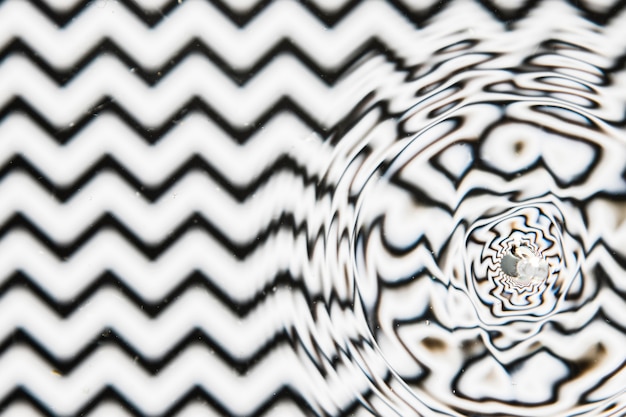
Take the famous “Café Wall” illusion, discovered by Richard Gregory in the 1970s. At first glance, the horizontal lines appear to be slanted, but if you look closely, they are perfectly straight. Emma, a 28-year-old graphic designer from Seattle, said she spent nearly five minutes trying to figure out why the walls seemed to slope before realizing it was all in her head.
Another mind-bender is the “Rotating Snakes” illusion by Akiyoshi Kitaoka, a Japanese psychologist. This colorful pattern seems to spin endlessly even though it’s completely still. When 16-year-old high school student Luis from Miami saw it, he described the sensation as “like the image was alive and dancing,” proving how powerful visual tricks can be.
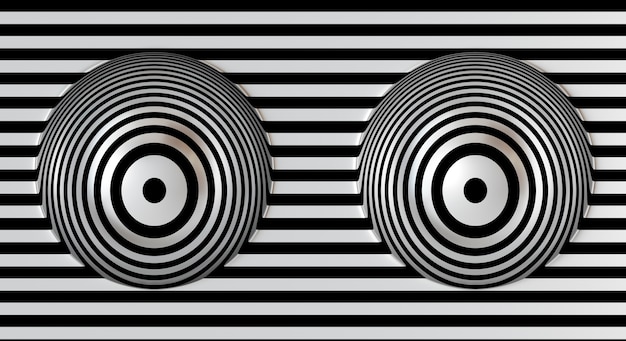
Then there’s the “Kanizsa Triangle,” where our brain conjures up a bright white triangle that doesn’t actually exist. Back in 2021, a group of art students in Berlin experimented with this illusion, using it to create stunning minimalist posters that captivated audiences without a single drawn triangle in sight.
The “Checker Shadow” illusion, discovered by Edward Adelson in 1995, is also a crowd favorite. It makes two squares of the same shade appear drastically different because of the shadow cast on one. This illusion sparked a spirited debate among 34 attendees at a London art exhibit, with some swearing the squares were different colors despite repeated demonstrations.
Finally, the “Ebbinghaus illusion” tricks your brain into misjudging the size of a central circle depending on the size of surrounding circles. When 9-year-old Mia in New York played with this illusion on a tablet app, she was amazed to see how her brain could be fooled so easily, showing that even kids can enjoy the perplexing power of optical illusions.
These illusions remind us that our perception is not always a faithful reproduction of reality, but a creative interpretation shaped by our minds. Embracing the beauty of these visual puzzles can inspire us to stay curious and open-minded, appreciating that sometimes, what we see isn’t always what’s truly there.